
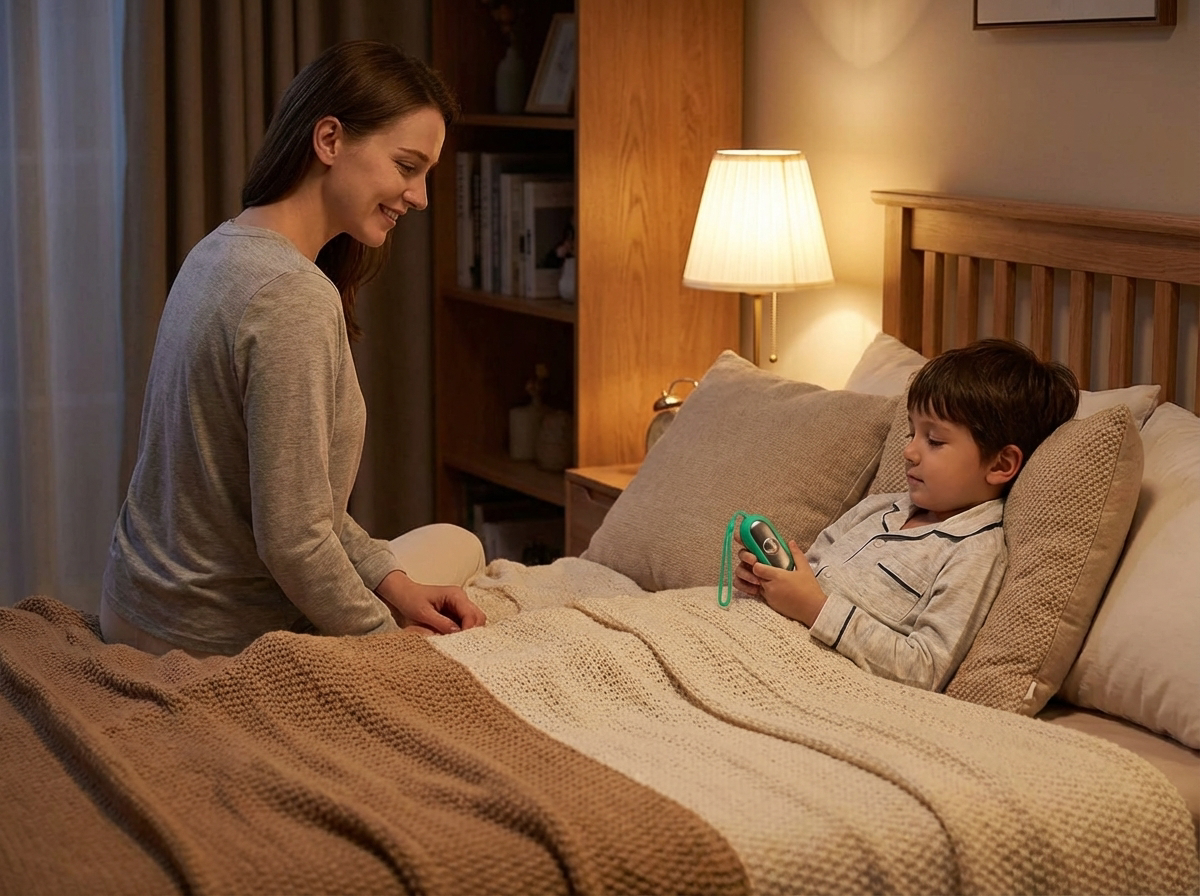
If you're wondering whether your child has ADHD, you probably think first of fidgeting, class clown behavior, or concentration difficulties. However, studies show: ADHD in children manifests in at least 7 less obvious signs that many parents overlook for years or attribute to other causes. A German survey found that on average, 2.7 years pass between the first noticeable signs and a diagnosis. In this article, I will show you the seven signs that often find little space in textbooks but can give you, as a mom, the crucial clue.
Why is ADHD often diagnosed late in children?
ADHD is more than "the restless boy in class." There are three subtypes: predominantly hyperactive, predominantly inattentive, and combined. While the hyperactive type usually stands out in kindergarten, the inattentive type goes under the radar for years. This particularly affects many girls who sit quietly in a corner, seem absent, and are simply labeled as "dreamy."
Additionally, many ADHD symptoms are reinterpreted. Sleep problems as "typical for children," emotional outbursts as "a bad day," forgetfulness as "still needs to learn." Only when several of these signs appear together and remain stable for months does it become clear: there is something structural in the nervous system here.
Which 7 signs are most often overlooked?
1. Persistent sleep problems. About 70 percent of children with ADHD have difficulty falling asleep. The brain doesn't wind down in the evening, melatonin levels rise belatedly, the child lies awake for hours, and can't be gotten out of bed in the morning. If your child has been taking longer than an hour to fall asleep for months, that's a signal. More on this in our article on sleep problems in children with ADHD.
2. Emotional dysregulation. Children with ADHD often feel emotions more intensely and have more difficulty "calming down." What might be five minutes of frustration for other children can be a half-hour tantrum for children with ADHD. This intensity is not "bad parenting," but a neurobiological symptom. Studies show that up to 80 percent of children with ADHD have significant difficulties with emotion regulation.
3. Constant forgetfulness in daily routines. Homework book in the classroom, jacket on the bus, water bottle at after-school care. If your child forgets what they just held in their hand, it's not "unfocused," but a typical sign of a weakness in working memory. In ADHD, working memory is, on average, 20 to 30 percent impaired.
4. Time blindness. The term sounds strange but describes something very concrete: Children with ADHD cannot estimate or perceive time well. Five minutes feel like an hour, an hour feels like five minutes. They start tasks too late because they don't notice time passing and are surprised when they are late. "You knew we had to leave at 8" falls on deaf ears here.
5. Hypersensitivity to stimuli. Tags on pajamas, noises from the next room, light from the streetlamp through the window. What other children can easily tune out, your child perceives at full volume. This weakness in sensory filtering is a central ADHD characteristic and also explains many of the sleep problems.
6. Difficulties with transitions. From playing to eating, from getting dressed to leaving the house, from evening activities to going to sleep. Children with ADHD remain mentally "stuck" on what they are currently doing. Initiating transitions costs them enormous mental energy. This leads to many morning and evening conflicts.
7. Paradoxical fatigue. One of the most frequently overlooked signs. Your child is extremely tired but cannot settle down. They become more awake the more tired they actually are. Instead of falling asleep, they become silly, start arguments, or can't sit still. This paradoxical reaction is typical for overstimulated ADHD nervous systems. More on this in the article why children with ADHD don't calm down in the evening.
What is the difference between normal behavior and ADHD?
Every child is forgetful, emotional, or restless at times. That's not ADHD. Four criteria help with classification:
- Duration: The signs are stable for at least 6 months.
- Multiple areas: They appear not only at home or only at school, but in several areas of life.
- Impairment: The child suffers from it themselves or cannot manage age-appropriate tasks.
- Early onset: First signs were present before the age of 12.
If three or more of the above 7 signs are stable and relevant in daily life for six months, a medical evaluation is worthwhile.
When should you go to the pediatrician?
There's a good time: not too early (every child has phases) and not too late (the earlier the diagnosis, the easier the support). Specific reasons for an appointment:
- Teachers have been reporting concentration or behavioral issues for months.
- Your child suffers themselves from their behavior ("Mom, I just can't do it") or shows signs of self-esteem problems.
- The family atmosphere is constantly tense because every daily routine becomes an argument.
- Sleep problems persist for longer than 6 weeks despite consistent attempts at sleep rituals.
The initial evaluation usually goes through the pediatrician, who then refers to a social pediatric counseling center, child and adolescent psychiatrist, or ADHD clinic. A diagnosis takes weeks to months because several appointments, questionnaires, and observations are necessary.
What can you do as a mom right now?
Whether a diagnosis is made in the end or not, these three steps help every child:
- Observe and document. For two weeks, write down which signs appear when. These notes are invaluable for any doctor's appointment.
- Address sleep problems. Sleep deprivation dramatically exacerbates every ADHD symptom. Before you even think about diagnosis, make sure your child is well-rested. Specific tips in our article on sleep aids without medication.
- Reduce stimulation in the evening. Screens off, dimmed lights, calm routine. This helps every child, but is essential for children with ADHD. Devices like the RuheStein can additionally support this by calming the nervous system through gentle PC8 stimulation.
And remember: an ADHD diagnosis is not a condemnation. It is an explanation that helps you and your child to deal more targeted with the strengths and weaknesses that are already there.
Conclusion: Trust your observations
If you, as a mom, feel that something is not "normally childlike," you are right in most cases. ADHD signs in children are often more subtle than the cliché of the hyperactive boy, and sleep problems are one of the earliest and strongest signals.
Observe for six months, document, talk to your pediatrician. And at the same time, take care of your child's sleep, because everything is easier when well-rested, with or without a diagnosis.
More background on sleep problems in ADHD and concrete answers can be found on our FAQ page.
Sources and further reading
- Banaschewski, T. et al. (2017): "Attention-deficit/hyperactivity disorder." Nature Reviews Disease Primers.
- Shaw, P. et al. (2014): "Emotion dysregulation in ADHD." American Journal of Psychiatry.
- Hofmeijer, J. et al. (2019): "Time perception in children with ADHD." Frontiers in Human Neuroscience.
- Deutsches Ärzteblatt (2018): "Diagnostik und Therapie der ADHS bei Kindern und Jugendlichen."
Disclaimer: This article does not replace a medical diagnosis. If you observe signs in your child, speak to your pediatrician or an ADHD clinic.