
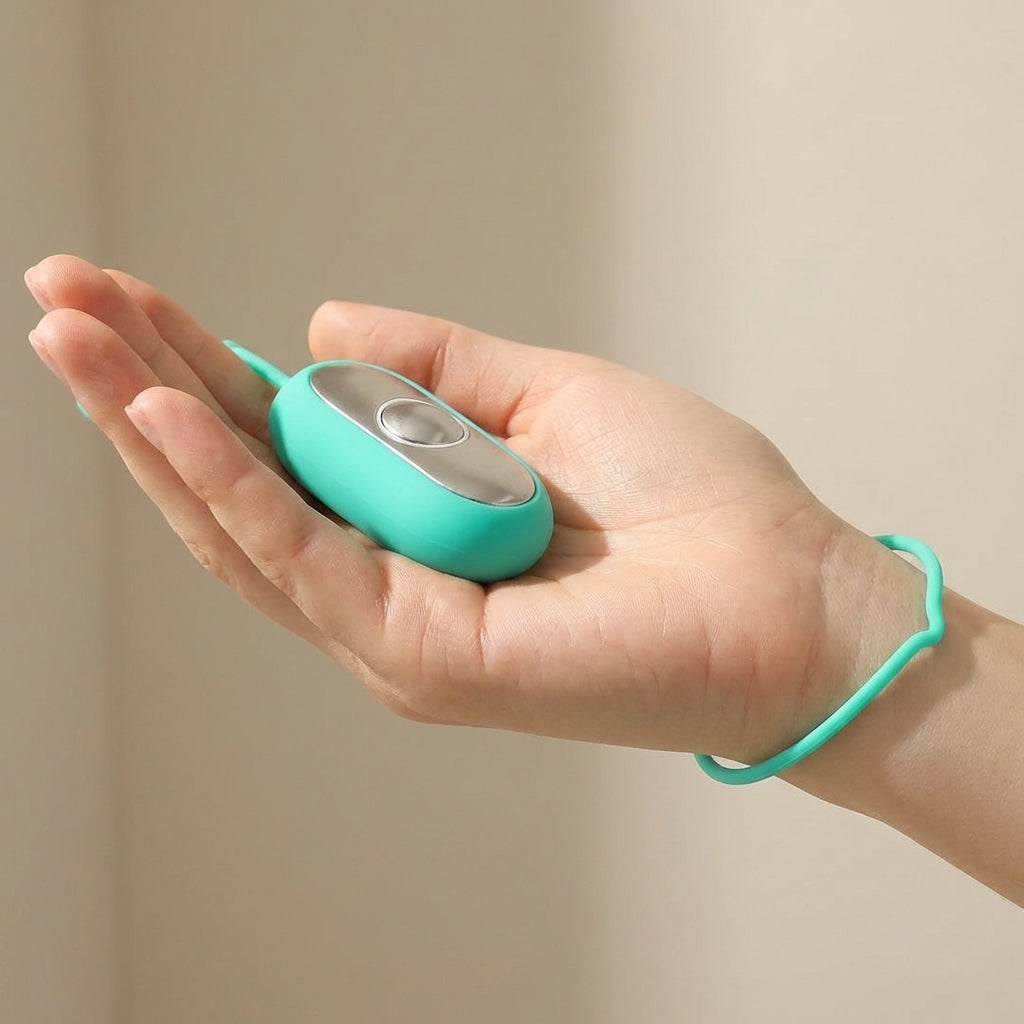
Sandra M. from Hamburg, 38 years old, mother of two, was on the verge of giving up. Her son Luca, then 8, had been diagnosed with ADHD since starting school and had an ongoing struggle with sleep. Two hours of bedtime battles every evening had become the norm. "I used to cry in the car before I even got home, knowing what awaited me," she says today. What ultimately helped her was no miracle cure or pill, but a small stone that Luca holds in his hand every night. This is Sandra's honest experience with the RuheStein.
What was daily life like before?
Luca was different even as a preschooler. More energy than his siblings, less sleep, more intense in everything he felt. It got worse with school enrollment in 2024. The stress level in his school routine was high, and in the evenings, his nervous system couldn't find a brake.
"From 7 PM, the dance began. Pajamas? Five reminders. Brushing teeth? Ten minutes of drama. In bed? Jumps out again, wants water, wants a story, wants a second story, wants to pee. Sometimes at 10 PM, he was still awake, staring at the ceiling," Sandra recounts.
The ADHD diagnosis at the beginning of 2025 initially brought relief. Finally, the family knew what was going on. But the sleep problems remained. The pediatrician recommended a sleep ritual, reduced stimulation, and exercise during the day. Sandra implemented everything. It helped a little, but not enough.
"I felt like I was already trying everything the books said, and it still wasn't enough. The next step would have been melatonin. But we wanted to avoid that as long as possible."
How did the RuheStein come into play?
"In February, a friend sent me a testimonial from a mom's group. It was about the RuheStein, a small stone that stimulates the acupressure point in the palm of the hand. I had never heard of PC8 or Laogong before."
Sandra researched for two weeks. "I'm naturally skeptical. I looked for studies, checked the money-back guarantee, looked at the ingredient list, meaning what materials were in it. It sounded okay, so I ordered it. At worst, I'd send it back."
A week later, the stone was in her mailbox. Small, smooth, black, about the size of half a chicken egg. USB-C cable for charging. Instructions in understandable German.
What happened on the first night?
"We presented it to Luca as a game. 'Look, this is your sleep stone, it helps your hand calm down.' He was curious. We turned the stone on, he held it in his hand, and I read to him as usual."
"What I noticed: He didn't constantly change position as he usually did. He just lay there. After 15 minutes, the stone automatically turned off. I took it from his hand, gave him a kiss, and turned off the light. Normally, then came the 'Mommy game': water, pee, stories. That evening, nothing came."
"I checked on him again around 9 PM, and he was asleep. I was so surprised that I stood in the doorway for a moment and just watched."
Sandra is the first to admit: One night proves nothing. "It could have been a coincidence. Maybe he was just particularly tired."
How did things develop over the next few weeks?
In the first week, there were two "normal" evenings with drama. But five evenings where Luca fell asleep within 30 minutes. "That was about a halving compared to before."
After two weeks, the routine was established. Luca himself asked for the stone when Sandra dimmed the lights. "My sleep stone, please." The average time to fall asleep was 25 minutes, measured with the stopwatch app on Sandra's phone.
"I kept a diary, every evening. Bedtime, sleep time, how often he got up, how he was in the morning. After three weeks, it was clear: This is no coincidence."
On day 23, Sandra showed the diary to the pediatrician at a routine appointment. "He nodded and said, 'If that works and Luca is doing well with it, keep it going.' I didn't need any more confirmation."
What has changed for the whole family?
Sandra is sober: "The RuheStein hasn't solved all problems. Luca still has ADHD, he's still impulsive, he still has stressful days. But he sleeps. And I sleep. And that changes everything."
"Evenings are calmer. I'm no longer a wreck when I finally sit on the couch at 9:30 PM. My husband and I talk again instead of just coordinating about the next crisis. Luca's older sister gets more attention because I haven't burned all my mommy energy on bedtime battles anymore."
"What I also noticed: Luca himself is different. He's less exhausted in the morning. At school, for three months now, there have been fewer complaints about him not paying attention or falling asleep. He's still him, but he's a well-rested version of himself."
What would Sandra advise other mothers?
"Try everything else first. Sleep rituals, reduced stimulation, exercise during the day. If that's not enough and you don't want to give medication, the RuheStein is a reasonable option. There's a 100-day money-back guarantee, so the risk is manageable."
"Don't be disappointed if nothing happens in the first few days. For us, it took two weeks until it reliably worked. Some people need longer."
"And: Don't expect miracles. It's a stone, not a magic wand. But if it helps your child calm their nervous system in the evening, that's worth more than any book on sleep hygiene you could still read."
What does this mean for other families?
Sandra's story is one of many. More than 4,000 mothers have tested the RuheStein in recent months. Experiences vary: Some notice nothing, some a small improvement, many a significant one. As with any method, there's no guarantee of effect. But the risk is manageable thanks to the 100-day money-back guarantee.
If you want to know how the RuheStein works biologically, read our article on the PC8 acupressure point. If you are looking for a structured evening routine in which you can integrate the RuheStein, our article on evening routines for ADHD children will help you. More details about Sandra's complete story and her decision against melatonin can be found in the comprehensive RuheStein experience report.
Conclusion: A mom who can breathe again
Sandra's story is not a promise of salvation. It is an honest account from a mother who tried everything the books said, and who finally found a solution that suited her child in a microcurrent device.
If you are in a similar situation, give yourself and your child the chance to try it. Set realistic expectations, allow two to four weeks, and use the 100-day money-back guarantee as a safety net. In the worst case, you've lost nothing. In the best case, you have calmer evenings.
Specific answers to questions about application, safety, and guarantee can be found on our FAQ page.
Note: Sandra M. is a pseudonym; the experiences described correspond to a real customer testimonial from our community. The RuheStein does not replace medical treatment. In case of diagnosed illnesses or sleep disorders, please consult your pediatrician.