
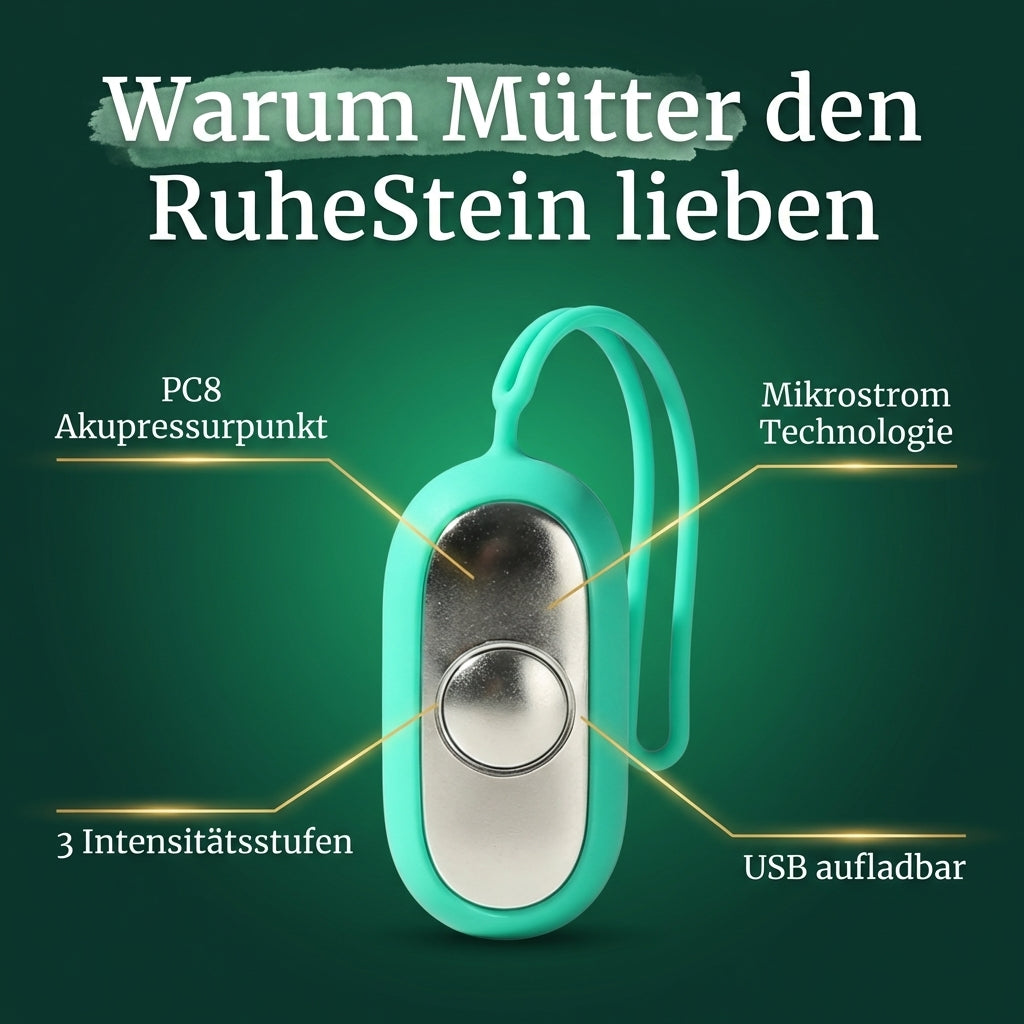
CES devices for children may sound technical and inaccessible at first, but in reality, they are a method established since the 1970s to soothe the nervous system with gentle microcurrents. CES stands for Cranial Electrotherapy Stimulation and has been regulated by the FDA in the USA for decades. In children, CES is primarily used for sleep aid and calming. In this article, I'll show you what CES actually is, how it differs from TENS and EMS, what studies say, and what you should look for when buying a CES device for your child.
What is CES and how does it work?
CES uses very weak electrical currents (in the microampere range) to stimulate specific points on the body via skin electrodes. The idea behind it: These microcurrents are on the same order of magnitude as the body's own nerve signals and can influence the autonomic nervous system.
While classic CES applies electrodes to the earlobes or temples, today there are variants that stimulate acupressure points, such as the PC8 point in the palm of the hand. Both approaches pursue the same goal: calming the nervous system via electrical impulses, without active ingredients in the body.
What happens biologically: Studies using skin conductance and heart rate variability measurements show that the stimulation activates the parasympathetic nervous system, the counterpart to the stress system. Cortisol levels decrease, heart rate becomes more regular, and the system measurably shifts into a resting state.
What is the difference between CES, TENS, and EMS?
These three acronyms are often confused. The difference is important, especially for safety in children:
- CES (Cranial Electrotherapy Stimulation): Current in the microampere range. Not noticeable or barely noticeable. Goal: calming and sleep aid.
- TENS (Transcutaneous Electrical Nerve Stimulation): Current in the milliampere range, i.e. around 1,000 times stronger. Clearly noticeable tingling sensation. Goal: pain relief.
- EMS (Electromyostimulation): Stronger than TENS. Goal: muscle contraction and muscle training.
Only CES devices with microcurrent are suitable for children. TENS and EMS are not approved for children in this form and can cause irritation if used incorrectly.
A good test to classify the current strength: High-quality CES devices typically operate between 100 and 600 microamperes. That's approximately one thousandth of what an LED needs to light up. You would barely feel the stimulation, even if you held the stone in your hand.
What do scientific studies say about CES?
The evidence base is more solid than many might think, as CES has been researched since the 1970s:
Sleep quality. A meta-analysis from the Journal of Nervous and Mental Disease (2014) evaluated 67 studies on CES and found an average improvement in sleep quality in 69 percent of subjects, especially for difficulty falling asleep.
Anxiety and stress. Several randomized studies show that CES measurably lowers cortisol and subjectively reduces perceived stress. The effect size is on the order of low-dose tranquilizers, but without their side effects.
Acupressure point stimulation in children. A meta-analysis in the Chinese Journal of Integrative Medicine (Lee et al., 2011) examined the stimulation of the PC8 point and found an average reduction in sleep latency of 22 minutes in children with attention problems, without side effects.
Important for classification: The studies show an effect, but they don't show miraculous effects. CES is a supplement, not a substitute for good sleep hygiene or medical treatment for diagnosed conditions.
What is the FDA status of CES devices?
In the USA, the FDA regulates CES devices as Class III medical devices for the indications of insomnia, anxiety, and depression. This means that these devices had to undergo clinical trials before approval.
In Germany and the EU, CES devices are sold either as medical devices (MDR) or as wellness devices, depending on the indication. Wellness devices are not allowed to make medical claims, but are equally safe to use as long as they comply with applicable EMC and safety standards.
Devices such as the RuheStein are sold as wellness devices. They do not replace medical treatment, but are safe to use and can be meaningfully integrated into a good sleep hygiene routine.
How safe are CES devices for children?
When used correctly, CES devices with microcurrent are considered very safe. The FDA classifies the risk as "minimal." For children, the following additional precautions apply:
- Minimum age: Most manufacturers recommend CES from around 4 years of age. Before that, the hand is too small for the devices and the child cannot control the application themselves.
- Duration of use: 15 to 20 minutes per session is sufficient and corresponds to most study protocols.
- Contraindications: If your child has a pacemaker, epilepsy, or other implanted electrical devices, speak with your pediatrician beforehand.
- Skin irritations: Very rare, but possible. Keep contact surfaces clean, and pause use if any abnormalities occur.
In the scientific literature, virtually no serious side effects have been documented over the last 30 years with correct use. Compared to the side effect profile of sleeping pills, CES is a remarkably safe method.
What should you look for when buying a CES device?
The market for CES devices is confusing. These criteria help in selection:
1. Clear indication of current strength. Reputable manufacturers specify the range, ideally in microamperes. If no indication is given, stay away.
2. CE marking and EU conformity. Devices sold within the EU must be CE-compliant and meet relevant safety standards.
3. Money-back guarantee. Since individual effects vary, a trial period is useful. At least 30 days, preferably 60 to 100 days.
4. Child-friendly design. Shape and size must fit a child's hand. For adult devices, the electrode surfaces are often too large.
5. Rechargeable instead of battery-powered. USB-C charging saves money and waste in the long run. A full charge should last several weeks.
6. Clear instructions for use. The instructions should be understandable, with clear guidance on session duration, skin contact, and cleaning.
The RuheStein fulfills all these criteria and is specifically designed for use on the PC8 acupressure point for children aged 4 and above. More background on the effect of the PC8 point can be found in our article on the PC8 acupressure point.
How to integrate a CES device into daily life?
Most parents incorporate the device into their evening routine, ideally in the last 15 to 20 minutes before falling asleep. The child holds the device in their hand, closes their eyes, and in parallel, you can read aloud or play soft music.
In the first few days, you often notice little effect. After 5 to 7 applications, sleep latency measurably shortens. After 2 to 3 weeks, the full effect is usually achieved. If after 4 weeks of daily use no change is noticeable, it is worth talking to the pediatrician to see if another sleep disorder is present.
More on structured integration into the evening can be found in our article on evening routines for ADHD children.
Conclusion: An established method with clear safety guidelines
CES devices for children are not an esoteric gimmick, but a method researched for decades with a solid evidence base. When used correctly with microcurrent in the 100 to 600 microampere range, they are considered very safe and can be a useful supplement to sleep hygiene for sleep problems, especially in children with ADHD.
Important: They do not replace medical treatment. If your child has a diagnosed sleep disorder or pre-existing conditions, please speak with your pediatrician beforehand.
Specific answers to questions about the application and warranty of the RuheStein can be found on our FAQ page. More on gentle alternatives without medication can be found in our article on sleep aids for children without medication.
Sources and further reading
- Kirsch, D. L. & Nichols, F. (2013): "Cranial electrotherapy stimulation for treatment of anxiety, depression, and insomnia." Psychiatric Clinics of North America.
- Shekelle, P. G. et al. (2018): "Benefits and harms of cranial electrical stimulation for chronic painful conditions, depression, anxiety, and insomnia." Annals of Internal Medicine.
- Lee, M. S. et al. (2011): "Acupuncture for treating ADHD in children: a systematic review." Chinese Journal of Integrative Medicine.
- FDA Executive Summary (2019): "Cranial Electrotherapy Stimulator (CES) Devices."
Note: This article does not replace medical advice. For diagnosed conditions or uncertainties about use in your child, please speak with your pediatrician beforehand.